
Progress and the Pale Horse
Leadership, alignment, and the four horsemen of Canadian football

Note: A summarization; it is a mess at the top of the football pyramid. If you wish to read the remaining 4000+ words of my observations then, you’ve been warned, and thank you.
Change or Stasis
“Progress is impossible without change; and those that cannot change their mind cannot change anything.” — George Bernard Shaw
Inside the borders of this vast expanse, where moose and beavers roam and the maple trees burst in autumn colour, the football is still round and it is played in all inhabited areas. How it is organized, however, is less clear.
And yet, as sure as there are four seasons of differing character and colour, there are differing ways football is managed. For every brilliant red leaf of fall there is a blank white sheet of winter, a grey stillness before rebirth, and then the shimmering lake reflection of summer’s return. In this country, we are close to having everything and everyone represented.
Reluctantly, I am exploring a line of questioning, a loose Part II to last week’s essay on Canadian soccer leadership. I say reluctantly because I am not a journalist and don’t wish to be mistaken for one. But so many people messaged with questions that it seems worth continuing as a kind of guide, a sort of football wanderer searching for truth, knowing it might never be found.
For those reading beyond Canadian borders, I ask your patience. This is not simply a national story. It is a mirror. The conditions here reflect the wider struggle in world football: how we organize, who we empower, and what happens when the game’s leadership loses alignment with its spirit.
Let’s set the stage.
The Rule of Four
Like the archetypal “fours” of myth and psyche, Canadian football today is split between four powers, each necessary, yet in conflict.
As a way of illustrating a few observations, we will first look at examples of alignment and collapse from the club world, then the symbolism of the number four, before returning to our own football landscape to see what lessons might lie within.
A Tale of Two Giants
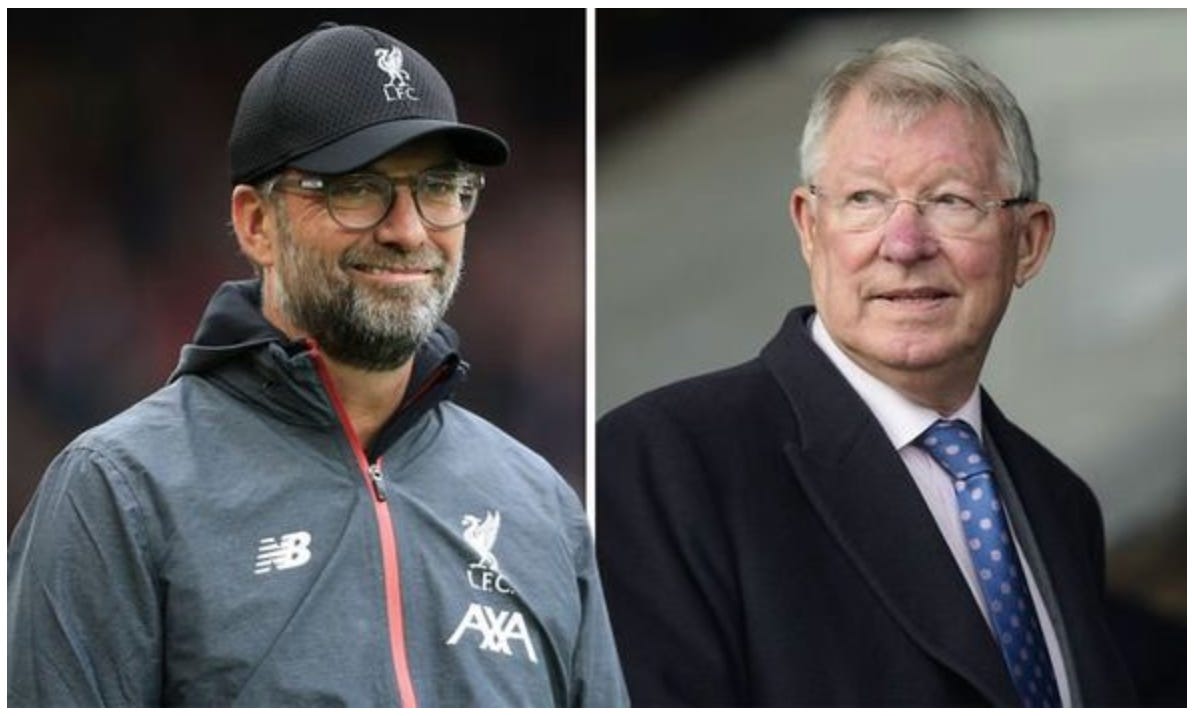
Recount the way world-class clubs Liverpool FC and Manchester United went about their business in the early 2000s. England’s two most illustrious clubs could not have been more different.
Liverpool, under the ownership chaos of Texan David Hicks and hockey-loving George Gillette, were in free fall, nearly bankrupt and at risk of falling out of the elite altogether. Performances were dire but for the heroic defiance of Gerrard, Carragher, and Benitez, whose leadership on the field temporarily shielded the club from institutional rot.
Across the northwest, Manchester United were riding the opposite wave. Under the iron hand and vision of Sir Alex Ferguson, United were disciplined, unified, and relentless. Ferguson had his imprint on every part of the club and pulled it toward heights few institutions in sport have ever known.
Fast-forward to the modern era. The positions are reversed. United, long out of the Ferguson shadow, now languish under absentee ownership. The Glazer family, siphoning profits and content with brand strength over football health, have overseen a slow decline. Without leadership alignment, the club that once set global standards has become a cautionary tale of fragmentation.
Liverpool, meanwhile, rose from the ashes. Bought cheaply by Fenway Sports Group, the club enacted a long-term plan: rebuild Anfield, modernize training grounds, introduce data-led recruitment, and hire the right people from pitch to boardroom. The relationship with supporters was rebuilt, trust restored, trophies returned.
Fifteen years of steady leadership and alignment carried Liverpool back to its rightful place among the world’s elite.
These two stories speak loudly.
When leadership fractures, results survive only for a time.
Even great players can only carry chaos so far.
Without the whole organization moving in the same direction, sustained success is impossible.
The best-run clubs mirror the psyche itself: balanced, integrated, each part serving the whole. When that balance breaks, chaos rushes in, as old myths have long warned.
The Archetype of Wholeness
“The quaternity is the archetype of wholeness par excellence.” — Carl Jung, Aion
The number four is deeply archetypal. It recurs in religion, psychology, art, and myth, almost always representing balance, integration, or the tension between order and chaos. A system built on four parts often encodes the totality of human experience: not perfection, but completeness.
In my experience watching the four powerbrokers of Canadian football, I began to sense a parallel, a quaternity both necessary and unstable, filled with tension and contradiction. To explore it, let us turn to one of the oldest “fours” of all.
The Four Horsemen and Canadian Soccer
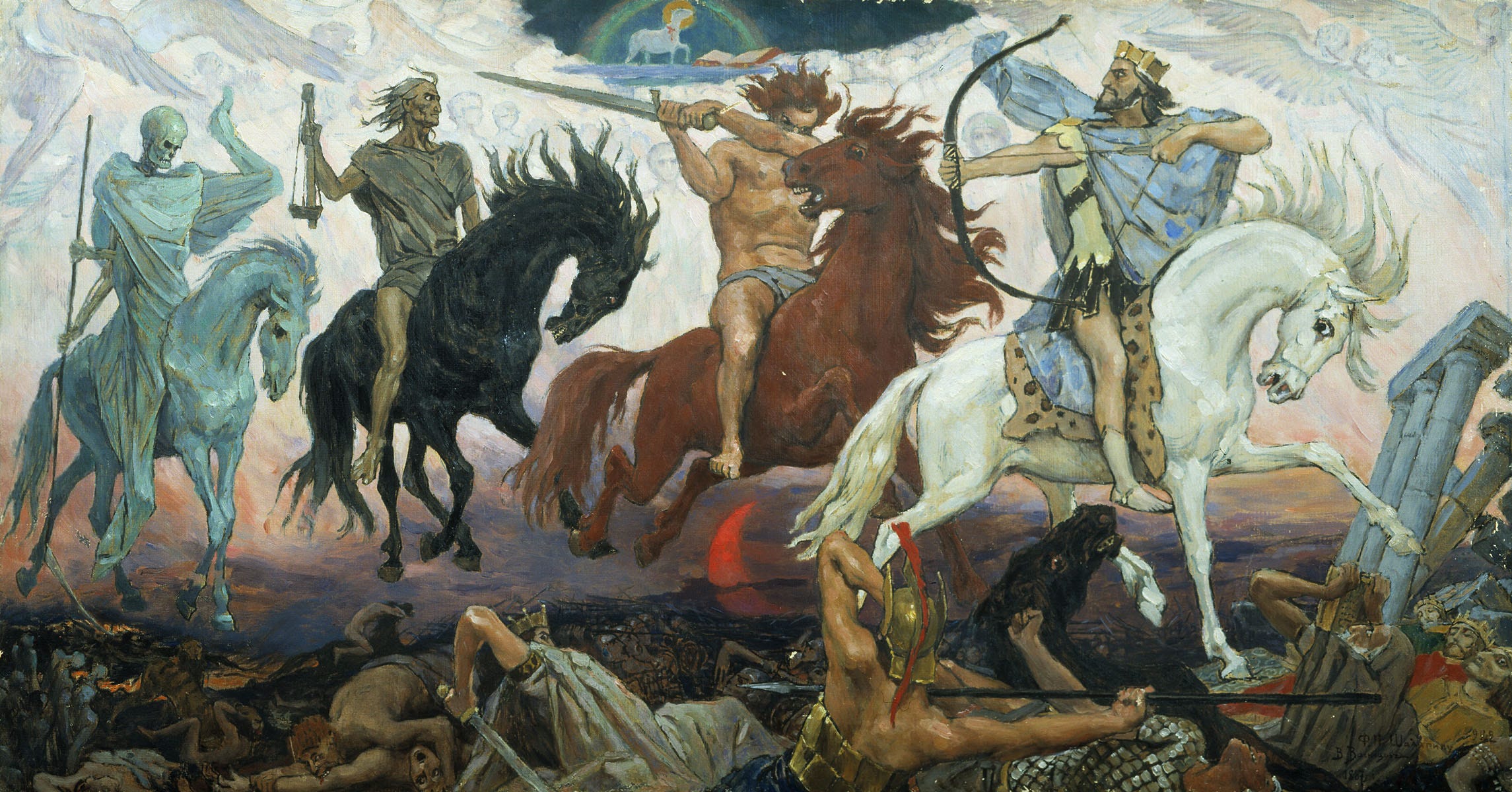
In the Book of Revelation (6:1–8), the apostle John describes four horsemen who ride forth as the seals of a divine scroll are broken. Each rider is a force unleashed upon the world, not literal beings, but archetypes of chaos and consequence.
The White Horse - Conquest (or Pestilence)
A crowned rider with a bow, sometimes read as a figure of triumph, sometimes deception.The Red Horse - War
Wields a great sword, bringing conflict and bloodshed.The Black Horse - Famine
Holds scales of scarcity, economic collapse and inequity.The Pale Horse - Death
Followed by Hades, symbolizing decay and the aftermath of all else.
These four have ridden through history and literature as metaphors for imbalance, forces that appear when human systems lose harmony.
Canada’s Quaternity — The Four Power Centres

Canadian football (or soccer, forgive the occasional confusion) sits precariously at such a crossroads. Four major institutions, each essential, each pursuing its own path, now shape the fate of the game.
Here is the modern quaternity.
1. Canada Soccer (CSA)
Mandate: To govern the game nationally under FIFA authority, providing leadership from grassroots to professional levels.
Leverage: Holds official sanction, World Cup hosting rights, and symbolic legitimacy as the governing body.
Dependency: Relies on provincial sport organizations (PSOs), districts, and clubs for actual delivery, layers that now act semi-autonomously.
Friction: Power has eroded through years of underfunding, miscommunication, and loss of trust. Financially stable, but struggling to grow.
A horse riding with a crown but limited command, a symbol of conquest without control.
2. Major League Soccer (MLS and SUM)
Mandate: Operate top-tier professional football across North America.
Leverage: Wealth, infrastructure, and global visibility.
Dependency: Three Canadian clubs (Toronto, Vancouver, Montreal) serve as local anchors but answer to an American league and its commercial arm, Soccer United Marketing (SUM).
Friction: Enormous influence but cross-border governance complications. Canadian owners fund national coaches and infrastructure but answer to U.S. systems.
A horse riding between borders; powerful, generous, but never fully aligned.
3. Canada Soccer Business (CSB)
Mandate: Commercial partner to Canada Soccer; operator of the Canadian Premier League (CPL) and certain League1 tiers.
Leverage: A decade-long contract granting control over national team commercial rights in exchange for a fixed annual payment to the CSA.
Dependency: Needs CSA sanctioning, requires greater exposure, and to create league stability to justify and build commercial expansion.
Friction: Growing influence amid questions about transparency and equity. Their “One Vision” for unified football may also centralize ownership of development pathways.
A horse that rides holding capital but risking scarcity through overreach and limited exposure.
4. Northern Super League (NSL)
Mandate: Build a sustainable professional league for women.
Leverage: Backed by strong owners, significant multi-million-dollar grants, and public goodwill for advancing women’s sport.
Dependency: Receives funding from Canada Soccer but stands apart from CSB, rejecting centralization.
Friction: Structural independence may become isolation; competing visions for the women’s game create tension with the existing commercial frameworks.
A horse riding with dual meaning; death of the old system, or birth of something truer yet independent.
(Embedded within these horse’s shadows lies a lawsuit, a $40 million claim from national team players who allege exclusion from that very partnership. Should they succeed, the financial blow could leave the governing body staggering, famine made real.)
Together, these four entities form a quaternity, distinct, dependent, and yet at odds.
From the ground level, it’s easy to mistake activity for alignment, but the kitchen has too many cooks and few sous-chefs. Each holds part of the recipe, but no one stirs the pot.
The Pressure Test: Follow the Money
Who controls the capital? And how does it shape the soul of the game?
Every one of these four horsemen now competes for the same sponsors; the same banks, telecom companies, and corporate partners, all while fighting for airtime in a nation dominated by hockey and baseball. Below them, grassroots clubs beg for crumbs to sustain youth programming (not to mention the other sports in the same markets.)
This is not uniquely Canadian. Across the border, America’s new “college professionalization” has rewritten the landscape, eighteen-year-olds signing million-dollar deals, Olympic pathways eroding, and outsider sports withering under private equity’s shadow. Wherever money flows, meaning follows, and something essential is always left behind.
The Four Riders of Canadian Football
If we were to map the ancient riders to our modern field, it might look like this:
White Horse (Conquest) – Canada Soccer’s illusion of central authority, a crown without the kingdom of followers.
Red Horse (War) – Power struggles between CSA, CSB, NSL, and MLS; necessary partners locked in battle to control the game.
Black Horse (Famine) – Overlapping sponsorship pursuits, top heavy capital distribution, and legal risks draining the ecosystem’s oxygen.
Pale Horse (Death) – Erosion of meaning and grassroots connection, even as national teams thrive at the summit.
Olympic medals and World Cup appearances disguise the deeper issue: a governance structure out of balance. The apocalypse, the unveiling, may already be here.
A Crisis of Governance
So where are we?
Are we being led and managed by four competing powers, each chasing the same dollars and declaring its own vision of leadership?
Are we, in fact, a nation at the mercy of overlapping empires?
Should the governance structure be rebuilt, with alignment, with the game at its core, with gratitude, and long-term sustainability as its guideposts?
Perhaps the end is not annihilation, but revelation.
Reimagine: Apocalypse as Revelation
In Greek, apokálypsis means “unveiling.”
Philosopher Viktor Frankl, who survived years in Nazi concentration camps, saw the apocalypse not as destruction, but as exposure; a stripping away of illusion. The horsemen, he wrote, are not punishers, but teachers.
They destroy arrogance, expose division, reveal emptiness, and demand humility.
Could Canada’s football institutions face their own unveiling? Could chaos be the necessary precursor to re-alignment, a rebirth for the next 25 years?
Frankl’s Meaning and a Path Forward
Frankl’s Logotherapy tells us that meaning is not found by avoiding suffering but by facing it directly. Out of that confrontation comes a reorientation, a shift from survival to significance. Each of the horsemen, seen through this lens, becomes not a destroyer but a guide, a necessary revelation for the next chapter of Canadian football.
The White Horse, long obsessed with conquest and the illusion of control, asks us to move from a will to power toward a will to meaning. Instead of guarding assets and titles, leadership must embrace shared custodianship of the national game. Power, when dispersed wisely in the form of a truly unique and well organized governance structure, need not weaken, it multiplies its purpose.
The Red Horse, whose sword has cut through the fragile pretending of mismanaged governance, exposes our divisions so that responsibility can take their place. Rival institutions could choose cooperation over competition, aligning calendars and priorities not by edict but by mutual respect. The fire of conflict, if directed with intent, can forge unity instead of ash. All at the table, a singular voice to the rest of us. A truly connected pyramid.
The Black Horse, riding with its scales and its scarcity, reminds us that famine is not only of food or funds but of gratitude. To escape this hunger, we must transform the pursuit of sponsorships and market share into a shared commitment to transparency and trust. The game must feed itself again on meaning, not just marketing. We must support the base and we must align everything. Capital will flow when we know who we are talking to, where information is coming from and why, communicate respectfully, and honour the foundations of the game.
And finally, the Pale Horse, often feared as the harbinger of death, arrives with a quieter lesson: humility. Mortality, whether of individuals, systems, or old ideas, is the doorway to transcendence. If those at the top can release the need to preserve their own empires, they may find themselves building something lasting, something that outlives them. In the end it is about the football. The game remains.
In this sense, the apocalypse becomes awakening. What appears to be the end might instead be the unveiling of a truer order, a football culture guided not by possession, protection, and scarcity, but by meaning, responsibility, gratitude, and transcendence. It is there, in the acceptance of loss and the reorientation of purpose, that new life begins.
If leadership could shift its “will to power” toward a “will to meaning,” Canadian football might finally transcend its structural adolescence.
The Modern Quaternity Test
We are left, fittingly, with one more set of four; modern, playful, and just as symbolic.
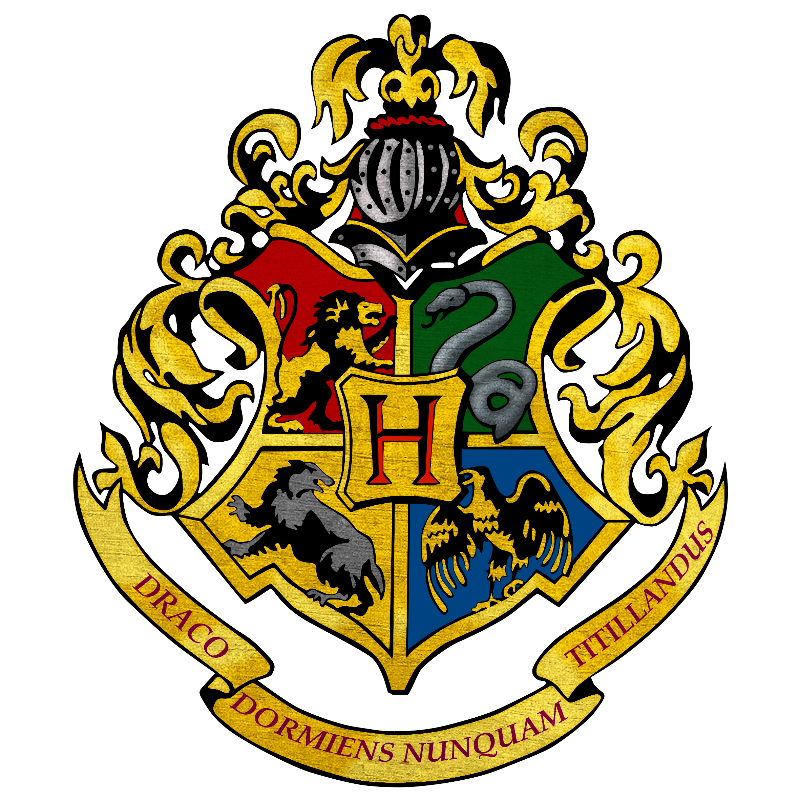
Hogwarts School of Witchcraft and Wizardry may seem a whimsical reference, but J.K. Rowling’s world also rests on a quaternity. Four houses, four elements, four virtues, a metaphor for balance.
Gryffindor (Fire) - Courage and action.
Can our leaders find the bravery to confront the commercial rights impasse and realign their purposes?Ravenclaw (Air) - Intellect and imagination.
Can we design a governance structure that replaces redundancy with transparency, a collective vision and a single voice that leads but doesn’t control?Hufflepuff (Earth) - Loyalty and patience.
Can we re-centre focus on the base of the pyramid, where hundreds of thousands of players and parents hold the game’s true heartbeat, by centrally communicating and providing value for all?Slytherin (Water) - Ambition and instinct.
Can competition and collaboration coexist, ensuring that success in one tier elevates the whole?
When all four coexist, harmony emerges. When one dominates, corruption follows.
Before the Pale Horse
The observation is clear: without swift, courageous, and imaginative reform, Canadian football risks dissolving into a battle for pesos and prestige, while the very foundation that supports the game, the children, families, the clubs, and communities, erodes beneath it.
Change demands courage, intellect, loyalty, and ambition in balance; a quaternity worthy of the game itself.
Canada’s football future will depend on whether its leaders can change their minds before the Pale Horse arrives.
Cheers for reading,
Will
Author’s Note
This piece follows last week’s reflection on leadership in Canadian football and continues the search for meaning amid complexity. The intent is not judgment, but invitation to think, to question, and to imagine what a re-aligned future might look like if courage, intellect, loyalty, and ambition were finally balanced in service of the game’s soul. The conversation should be considered ongoing.
__________________________________________________________________________
Past articles you might like on The Art of Football:
Catching Them All: A Letter to the President of Canada Soccer
The Examined Game: Bielsa In Bilbao
He Told Me to F##k Off… So I Gave Him the Captain’s Armband
__________________________________________________________________________
Impresssive comparisons Will! Are you sure you are not a journalist! 👏🏻👏🏻👏🏻
Canada is too small and too geographically dispersed NOT to be aligned, although there are 4 telecoms 😉